We built an online shop for a candle maker. It took seven messages, and here is why
By Matthew, Developer · · 5 min read
In short: TypeAnApp built a handmade candle shop with product pages, stock counts, card checkout through Stripe and an orders page for the maker. It was our hardest build of six: seven messages, about 19 minutes and 81.1 build credits, mostly because we rebuilt checkout so customers can never change what they pay. Wick & Willow is an example business.
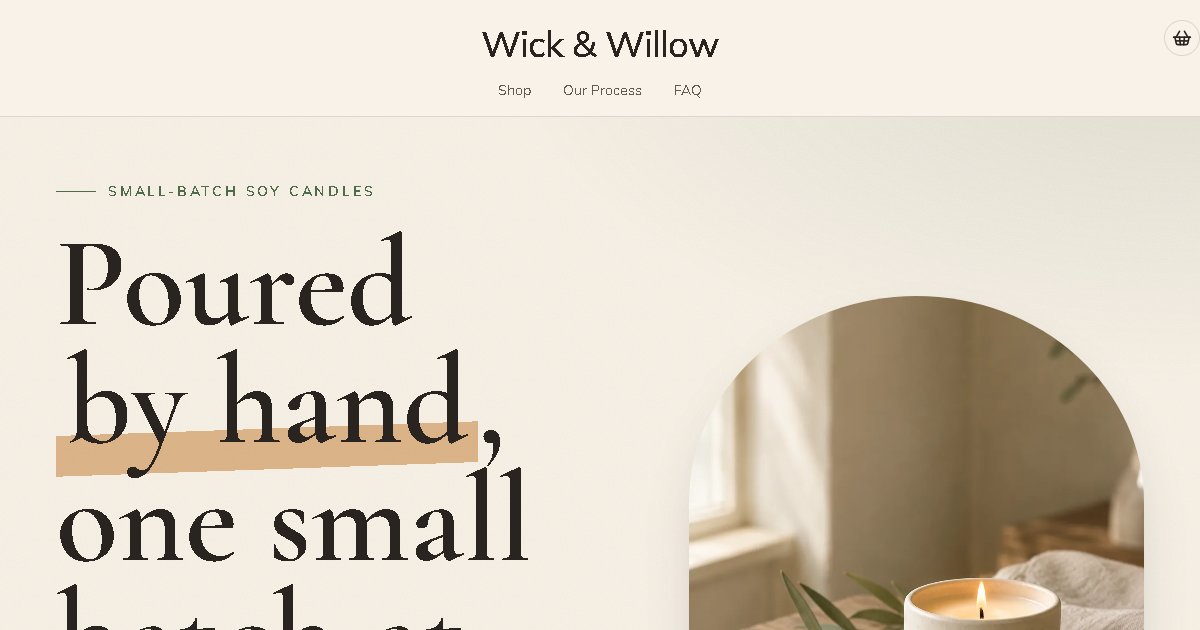
Wick & Willow is an example business we built to show what TypeAnApp can do. Visit the live site.
Five of our six showcase builds were done in under ten minutes. This one wasn't, and we think that makes it the most useful post of the series. Shops are where money changes hands, and that is where an AI builder has to be most careful. Here is what happened, including the parts that did not go to plan.
Facts at a glance
- Time to build
- About 19 minutes
- Build credits
- 81.1
- Messages sent
- 7
- Candles
- 4 sample scents
- Payments
- Stripe, test mode
- Delivery
- Free, one scent per order
What did we ask for?
What we typed
A small online shop for Wick & Willow, a handmade soy candle maker. Product pages with scent notes, burn time, size and price, a basket and checkout with card payments, an "our process" page about how we pour each candle by hand, and a FAQ about candle care and delivery. Each candle has a stock count, so sold-out candles show "Sold out" and can't be bought. I need an orders list where I mark orders as packed and posted.
What did the first build look like?
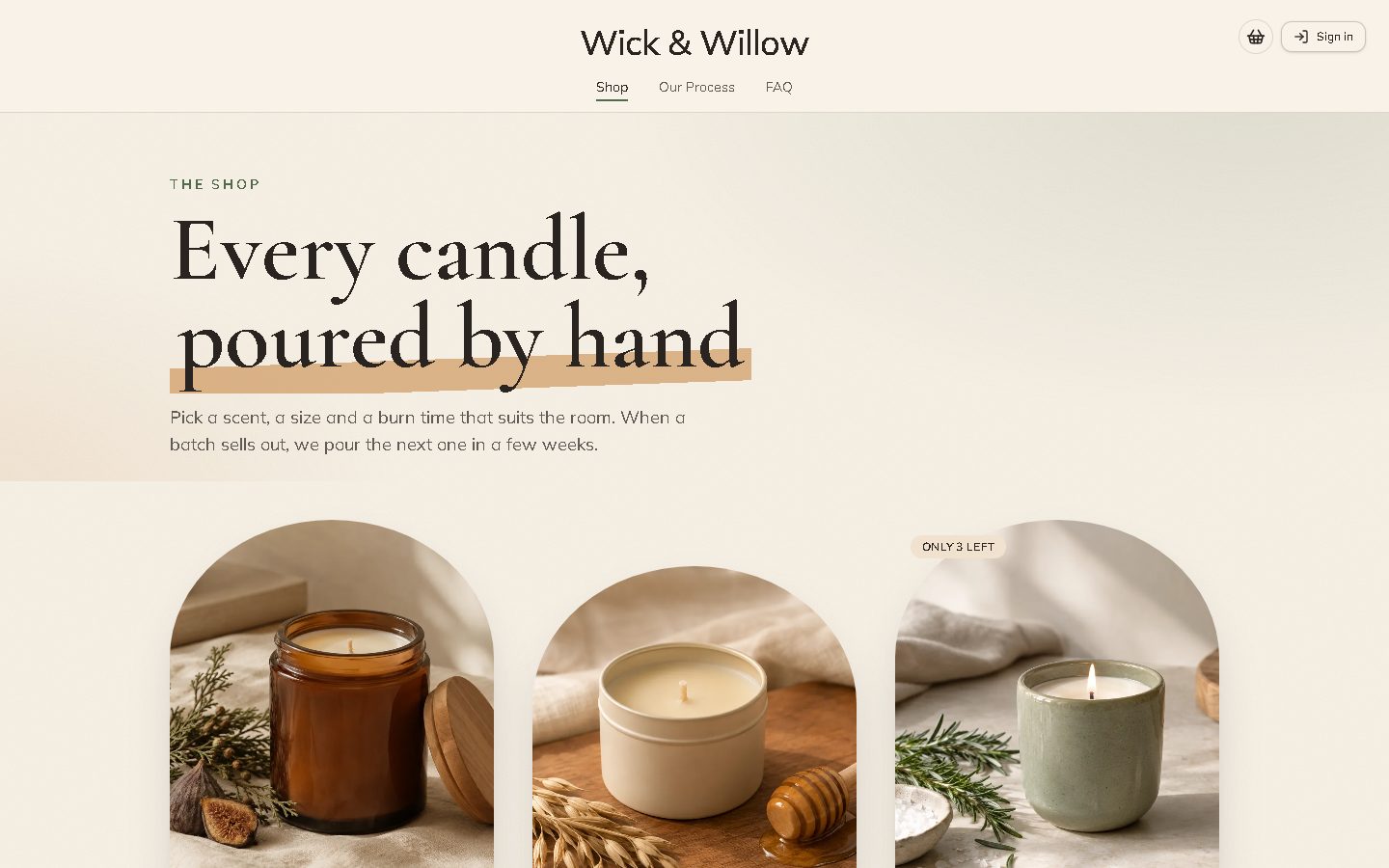
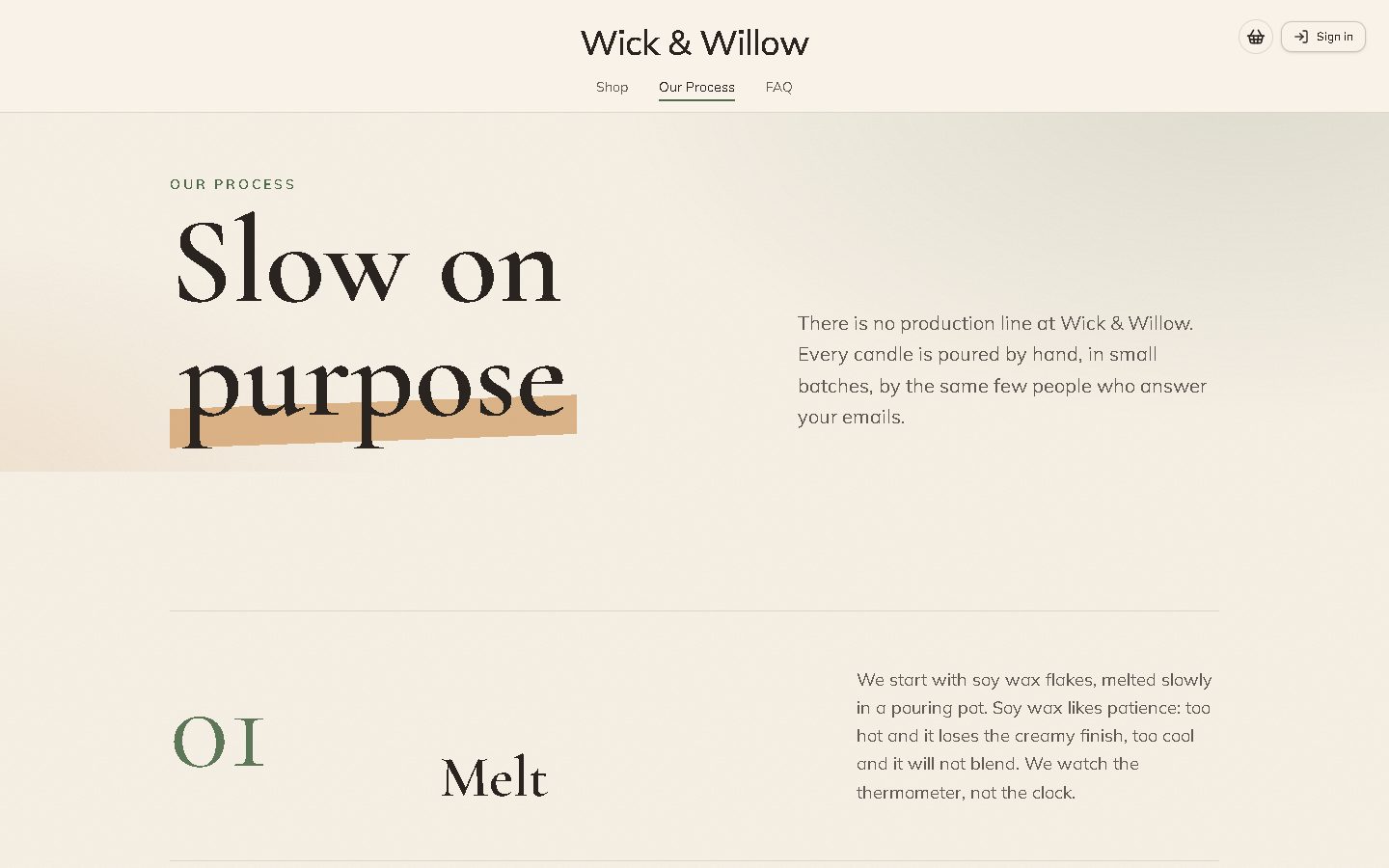
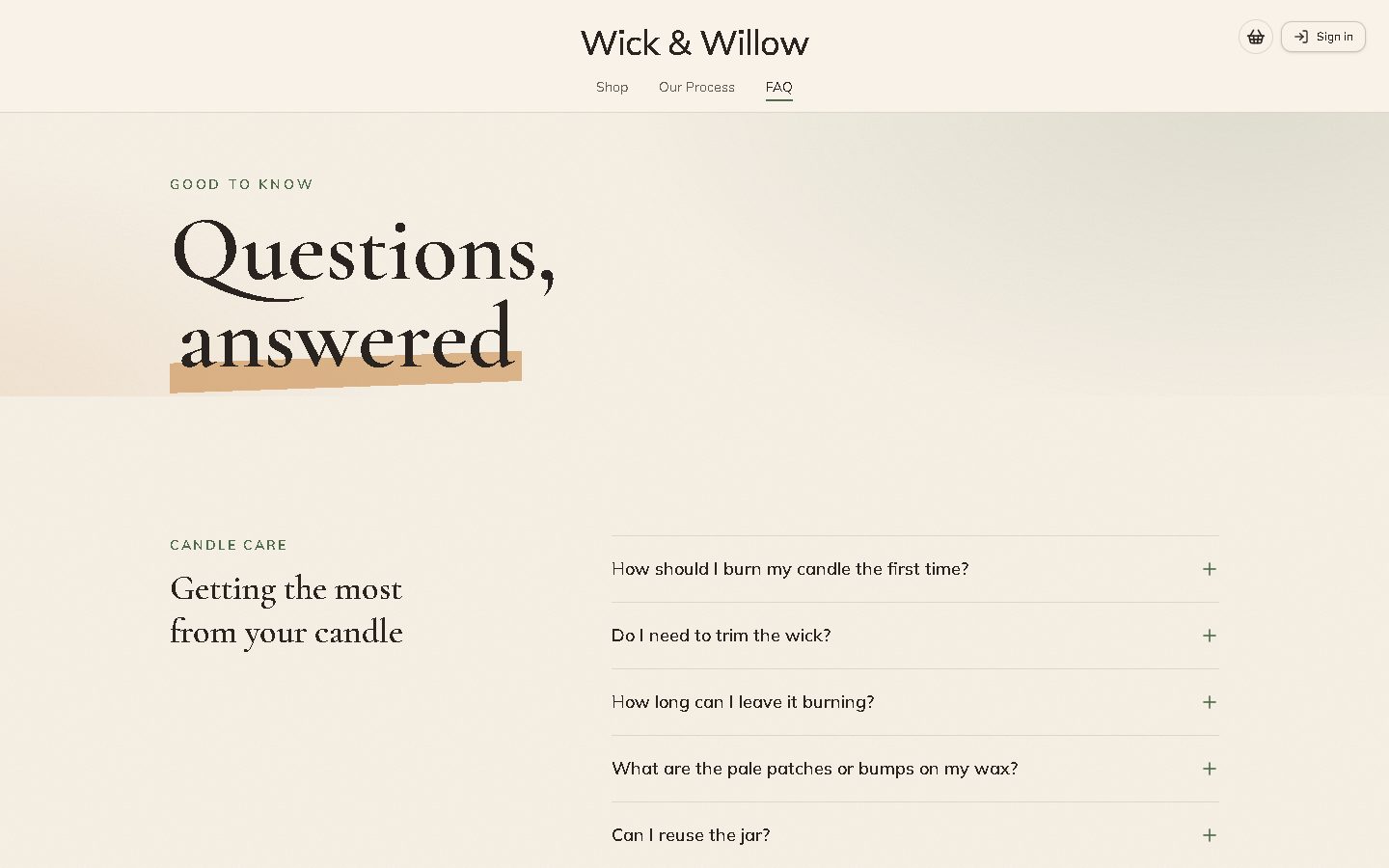
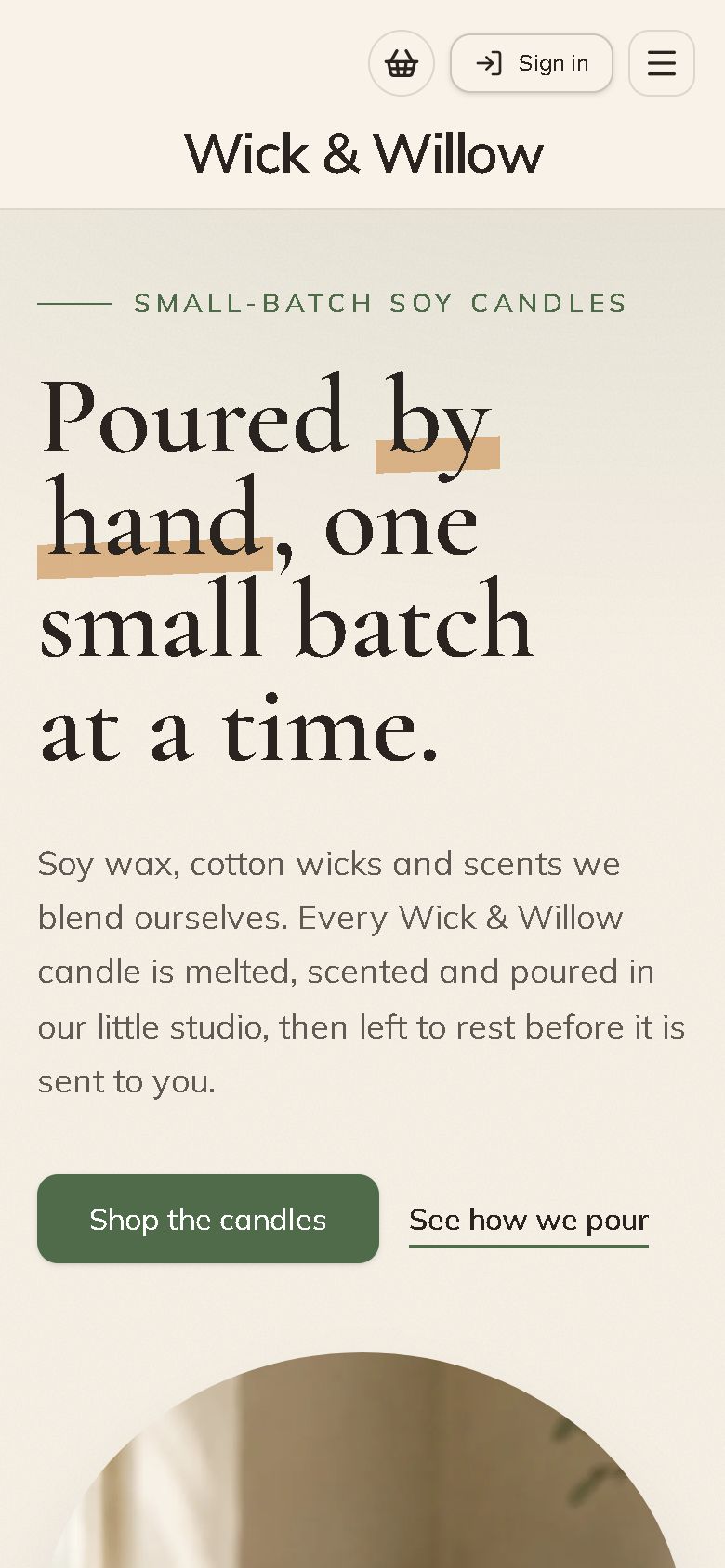
The first build took 6 minutes 25 seconds and 21.5 credits, and the look landed straight away: a quiet candle-studio magazine in cream, willow green and honey, big serif headlines, and candle photos cut into arches. It made six pictures as it built, one for each of the four candles plus the pouring and hero shots.
Why did checkout need rebuilding?
The first version used two small server steps (backend functions): one to place an order and work out the price on the server, one to cancel unpaid orders and put the candles back in stock. That is the right design. But backend functions are not switched on on TypeAnApp's live servers yet, so they could not run.
Our first fix made things worse, and it is worth saying so. Without server steps the basket saved orders itself, prices included, from the customer's browser. Anything a browser sends can be changed by someone technical, so in principle a customer could have edited what they paid. We stopped it there.
TypeAnApp's built-in payments take the price from settings the owner controls, never from the page. Moving the shop onto them took four more messages, because it changed a lot: fixed prices per candle, an order that records only the candle, quantity, delivery details and a reference to the card payment (never an amount), a thank-you page that saves the order only once the payment is confirmed, and an owner's check that refuses to accept an order unless the payment matches.
What are the trade-offs?
- One scent per order. Each card payment covers one fixed-price candle, so the basket holds one scent at a time (with a quantity), and the button says "Swap into my basket" if you choose another.
- Free delivery. A variable delivery charge cannot be added to a fixed-price payment, so delivery is included.
- The owner checks each order. New orders land in "To check" with the amount actually paid. Accepting is only possible when the payment is complete, for the same candle and quantity, and not used by another order. Otherwise the reason shows in red.
For a small maker these are fair trade-offs for a shop that cannot be tricked into undercharging. When server steps arrive on TypeAnApp, a multi-scent basket and a delivery charge come back.
How is the shop kept safe?
- Prices come from the payment settings, not from anything a customer saves.
- Orders can be created by signed-in customers, who can only see their own. Only the owner can change or delete them.
- Packing and posting live in a separate owner-only record, so a customer cannot mark their own order as posted, though they can follow its progress.
- Stock comes off when an order is accepted, and goes back if it is cancelled.
When we pressed Launch, TypeAnApp held it for one access change: letting signed-in customers create orders and read only their own. The owner approves that in the builder; the AI cannot.
What about SEO for a shop?
Each product has its own page with its scent notes, burn time and size in plain text, which is what search engines and AI answers read. Like every TypeAnApp site it launches with page titles, descriptions, social-share tags, a robots.txt and a sitemap.
What did it cost, and was it worth it?
81.1 build credits over seven messages: 21.5 for the first build, 7.7 to finish it, 11.7 for the first attempt without server steps, then 10, 10.2, 11.5 and 8.5 for the payments rework. That is four times our cheapest build. A shop that takes money deserves the extra care, and most of the cost came from working around one platform limit, which we have since taught the builder about up front.
What would a real candle maker do next?
- Approve the orders access change, then try a test order from payment to posting before launching.
- Connect their own Stripe account, set the real prices, and replace the sample candles and photos.
- Post each new order to Slack or Telegram from a workflow, so they see it on their phone.
Frequently asked questions
Can AI build an online shop with card payments?
Yes. TypeAnApp built product pages, stock counts, card checkout through Stripe and an orders page. Payments in this example run in Stripe's test mode.
Can customers change the price they pay?
Not in the finished shop. The price charged comes from payment settings the owner controls, and the owner's order check refuses any order whose payment doesn't match.
Why can a basket only hold one scent?
Each card payment covers one fixed-price item. Mixed baskets and delivery charges need server steps (backend functions), which are not switched on yet on TypeAnApp's live servers.
How much did this shop cost to build?
81.1 build credits over seven messages, about 19 minutes in total.
Is Wick & Willow a real shop?
No. It is an example business built for this case study, and its payments run in test mode.
Matthew, Developer: Matthew builds TypeAnApp, the AI app builder that turns a plain-words idea into a working website or app. He writes up every showcase build here: what we asked for, what came back, and what we changed.